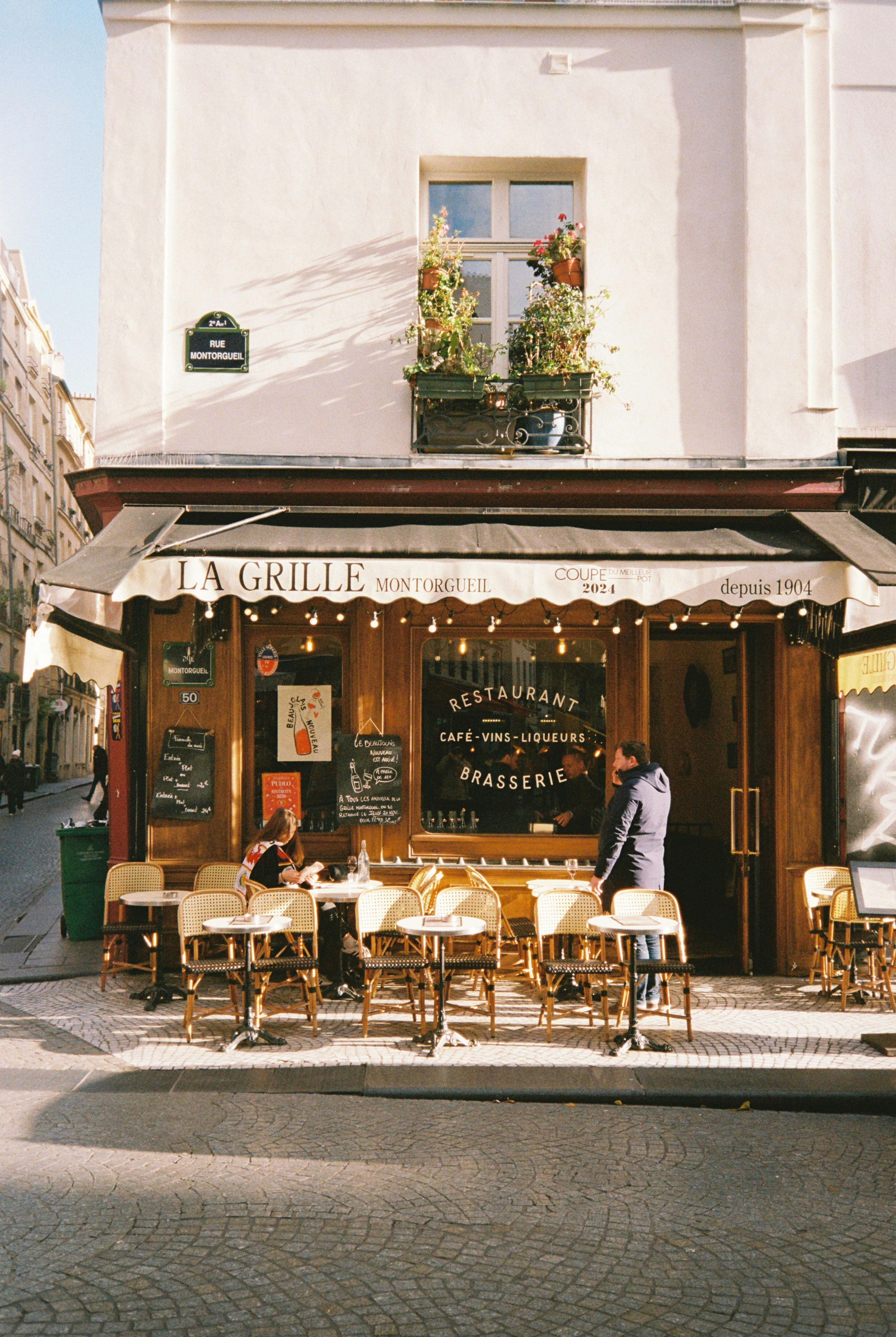
Opening a Restaurant in Paris: The Reality Behind the Opportunity
Paris is one of the most attractive markets in the world for F&B, hospitality and retail brands.
It offers:
- global visibility
- dense and affluent customer flows
- a strong culture of dining and lifestyle
But behind this attractiveness lies a reality that many international brands underestimate:
Paris is one of the most complex cities in the world to execute a project successfully.
Unlike more standardized markets, success in Paris depends on deep local knowledge, technical anticipation and execution quality.
Each year, international brands enter the market with strong concepts — yet many struggle or fail due to avoidable execution mistakes.
This guide breaks down the 10 most common mistakes foreign brands make when entering Paris, and how to avoid them.
1. Underestimating Real Estate Complexity in Paris
In Paris, a location is not just about visibility or footfall.
It is about legal, technical and stakeholder feasibility.
The Critical Role of the Co-Ownership Rules (Règlement de Copropriété)
Most commercial units are part of a co-ownership structure governed by a Règlement de Copropriété (RCP).
One of the most common and costly mistakes is failing to review this document early enough.
Before moving forward, you must verify:
- That the unit is designated for commercial use
- That your specific activity (e.g. restaurant, extraction, late opening hours) is allowed or excluded
- The approval process and voting rules in General Assembly
- Any restrictions on technical installations
Too often, brands discover too late that their concept is simply not permitted.
Exterior Modifications: A Major Hidden Risk
Even if a component belongs to the private unit, it may still require approval.
If a modification:
- is visible from common areas
- impacts the building’s appearance (even if you are only modifying a private part!)
it generally requires co-ownership approval (a 3–4 month process).
Typical examples: extraction systems, ventilation upgrades, façade modifications or rooftop installations.
If the new installation is not strictly identical, approval is required.
This can lead to delays, refusals and complex negotiations.
Best Practice
Always:
- review the RCP before committing
- map all approval requirements
- integrate these constraints into your deal
In Paris, real estate feasibility is multidimensional.
2. Ignoring Extraction Constraints (The #1 Deal Breaker in F&B)
Extraction is the single most critical factor for restaurants in Paris.
It directly determines what you can produce, how you operate, and whether your concept is even viable in a given location. Many projects fail before they start because this element is either misunderstood or validated too late.
Existing Extraction Does Not Mean Usable Extraction
An existing duct must always be verified. The presence of an existing duct is often seen as a positive signal. In reality, it means very little without proper verification.
An extraction system may be outdated, damaged, non-compliant with current regulations, or simply undersized for your concept. Assuming it is usable without technical validation is one of the most common and costly mistakes.
The Smoke Test (Test Fumigène)
A smoke test should be conducted as early as possible.
This allows you to detect leaks, verify the continuity of the duct and confirm whether it is operational. It is a simple but critical step to assess real usability before committing to a lease or advancing too far in the project.
Replacement Risks
If the duct is not compliant, replacement becomes necessary.
This is where complexity significantly increases. Even when replacing the system identically, co-ownership approval is typically required. This introduces uncertainty, as refusals are possible and negotiations are often needed.
In practice, replacing an extraction system can involve façade modifications, rooftop works, structural constraints and, in some cases, financial compensation to the co-ownership. These elements can heavily impact both timelines and budget.
Copropriété vs Monopropriété (Co-ownership vs Single Landlord)
- Co-ownership (copropriété) → complex, slow, risky
- Single Landlord (monopropriété) → faster, simpler, safer
The ownership structure of the building plays a major role.
In a copropriété, decisions are subject to approval processes (3-4 months), often slow and uncertain. Each modification can trigger discussions, votes, and potential opposition.
In a monopropriété, decision-making is centralized, making the process faster, more predictable and easier to manage.
For F&B operators, monopropriété assets are often significantly more secure from an execution standpoint.
Best Practice
Extraction should always be validated at the earliest stage of the project.
This means testing the existing system, anticipating the possibility of full replacement, and integrating potential approval processes and negotiations into the overall budget and timeline.
In Paris, extraction is not a technical detail — it is a structural constraint that can define the success or failure of a project.
3. Misunderstanding French Commercial Leases (3-6-9)
The French lease structure is a major source of risk.
Unlike more flexible markets, the commercial lease in France creates a long-term legal and financial framework that can significantly impact the economics of a project if not properly understood and negotiated from the outset.
A Long-Term Commitment
The 3-6-9 lease implies a 9-year contractual framework, with limited exit flexibility at the end of each 3-year period.
While this may appear standard, it creates a structural commitment that extends well beyond the initial investment phase. For many operators, the challenge is not entering the lease, but ensuring that the location remains economically viable over time. Early exit options exist, but they are constrained and often come with operational or financial implications.
The Major Risk: Rent Deplafonnement
Rent increases are normally capped through indexation mechanisms.
However, in certain situations, rent can be uncapped and reset to market value — a mechanism known as déplafonnement. This represents one of the most significant financial risks in a French commercial lease.
This can occur in cases of lease renewal, substantial modifications to the premises, major works, or changes in activity. When triggered, rent can increase sharply, sometimes disconnecting entirely from the initial business plan assumptions.
For operators, this creates a long-term exposure that is often underestimated at the time of signing.
Tenant Exposure
In most cases, tenants bear a significant portion of the investment.
This includes fit-out costs, compliance works, technical upgrades and ongoing maintenance. These capital expenditures are made upfront, while the rent structure may evolve over time without full predictability.
This asymmetry creates a risk profile where the tenant invests heavily without having full control over future occupancy costs.
Best Practice
Understanding and negotiating the lease structure is critical.
This includes anticipating rent evolution scenarios, identifying situations that could trigger déplafonnement, and securing contractual protections where possible. Beyond headline rent, the full economic equation — including duration, indexation, and legal clauses — must be aligned with the long-term business model.
Working with a lawyer specialized in French commercial lease law is strongly recommended to properly assess risks, negotiate key clauses and secure the tenant’s position.
In Paris, the lease is not just a legal document — it is a core component of the project’s financial performance.
4. Underestimating Construction Timelines
For restaurants above 300m², a realistic timeline is 8 to 12 months from lease signature to opening (for a full renovation).
This timeline is often underestimated by international brands used to more standardized environments. In Paris, construction is rarely linear. It is constrained by administrative processes, technical dependencies and urban limitations that must be anticipated from the very beginning.
Utility Delays
Connections to key utilities are a major source of delay.
Enedis → electricity
Eau de Paris → water
CPCU → heating
These connections can take several months, typically between 3 to 6 months, depending on the scope of the work and existing infrastructure.
Delays often come from administrative processing times, technical studies, scheduling constraints and coordination between different stakeholders. These timelines are largely outside of the operator’s direct control, making early anticipation critical.
Urban Constraints
Construction sites in Paris operate in a highly constrained urban environment.
Access can be difficult, especially in dense or central areas. Deliveries are often restricted to specific time slots, streets may be partially inaccessible, and on-site storage is limited or non-existent. In some cases, additional permits are required for cranes, scaffolding or temporary occupation of public space.
These constraints directly impact the sequencing of works, logistics planning and overall execution speed.
Building Complexity
Most buildings in Paris are old and were not designed for modern F&B operations.
This creates a high level of uncertainty. Hidden constraints are frequently discovered during demolition or early works, including structural limitations, outdated technical networks, or insufficient ceiling heights.
These discoveries often require design adaptations, additional engineering studies and unplanned upgrades, all of which can extend timelines and increase costs.
Best Practice
Construction timelines in Paris should always be approached conservatively.
This means planning for longer durations, integrating buffer periods, and anticipating delays from utilities, administration and technical constraints early in the process.
A realistic timeline is not a pessimistic assumption — it is a necessary condition to control execution and avoid costly overruns.
5. Not Anticipating ERP Regulations Properly
ERP compliance is critical.
In France, restaurants are classified as Établissements Recevant du Public (ERP), which means they must comply with strict regulations related to fire safety, accessibility and public protection. These requirements directly impact design, construction and operational setup.
ERP 5: A Declarative System
ERP category 5 is the most common classification for restaurants.
It operates under a declarative regime, meaning that it does not require a mandatory control office or a systematic inspection before opening. In theory, the operator simply declares that the project complies with applicable regulations.
This can create a false sense of simplicity, especially for international brands used to more formal approval processes.
The Hidden Risk
The absence of systematic control does not mean the absence of risk.
In case of incident, inspection or complaint, compliance will be verified in detail. If the project does not meet ERP requirements, the consequences can be significant — including financial penalties, operational restrictions or even temporary closure.
This risk is often underestimated because it is not visible during the early stages of the project.
The Role of a Control Office
A control office provides an independent technical review and ensures that all aspects of the project comply with current regulations.
It ensures:
- compliance
- risk reduction
- technical validation
By validating design and execution choices, it reduces risk, secures compliance and avoids costly corrections later in the project.
Best Practice
ERP constraints should be integrated from the earliest design stages.
This means anticipating regulatory requirements, validating technical solutions in advance and ensuring full compliance before opening. Relying solely on a declarative approach without proper verification exposes the project to unnecessary risk.
In Paris, compliance is not optional — it is a critical component of a successful and sustainable operation.
6. Poor Coordination Between Design and Execution
Design is not execution.
In Paris, the gap between concept and delivery is one of the most frequent causes of delays, budget overruns and operational inefficiencies. A strong design does not guarantee a successful project if it cannot be translated into a buildable, compliant and functional reality.
The Gap
Concepts are often visually strong but technically unrealistic.
Design teams may focus on aesthetics, branding and customer experience without fully integrating the constraints of the existing building, local regulations or operational requirements. As a result, projects that look coherent on paper can become difficult — or impossible — to execute on site.
This gap typically appears during technical studies or early construction phases, when design intentions confront structural limitations, regulatory constraints or budget realities. At this stage, late adjustments can significantly impact both timelines and costs.
The Role of the AMO
The AMO acts as the central coordinator between:
- designers
- architects
- contractors
- engineers
- landlord
- client teams (chef, bar manager, operations, branding)
- engineering consultants
- property manager (co-ownership manager)
- etc.
In a complex environment like Paris, coordination is a core function. Each stakeholder operates with different objectives, constraints and timelines. Without a central point of alignment, inconsistencies quickly emerge between design, technical feasibility and execution.
What the AMO Ensures
The AMO ensures alignment between all stakeholders throughout the project.
This includes validating technical feasibility early, integrating regulatory requirements into design, maintaining consistency between concept and execution, and controlling both costs and timelines. It also involves facilitating communication, managing arbitrations and ensuring that decisions are made with a full understanding of their operational and financial impact.
Best Practice
Strong coordination should be established from the earliest stages of the project.
This means aligning all stakeholders around a shared vision, validating key technical and regulatory aspects before construction, and maintaining continuous oversight throughout execution.
In Paris, the quality of coordination directly determines the quality of execution.
7. Underestimating Fit-Out Costs in Paris
Costs are often underestimated.
Opening a restaurant in Paris involves a level of technical complexity and regulatory compliance that significantly impacts fit-out budgets. Many international brands rely on benchmarks from other markets, but these are rarely applicable in Paris due to local constraints, building conditions and approval processes.
Typical Hidden Costs
- electrical upgrades → €20k–€80k
- extraction → €50k–€150k+
- fire safety → €30k–€100k
- façade → €20k–€150k
These cost ranges illustrate the most common budget gaps.
Electrical upgrades are often required to support professional kitchen equipment and comply with current standards. Extraction systems can become one of the largest cost items, especially when replacement or extension is needed. Fire safety requirements — including alarms, emergency lighting and compartmentalization — are frequently underestimated. Façade works, particularly in regulated or visible areas, can also add significant costs due to design constraints and approval processes.
These elements are rarely fully identified at the early stages of a project, which is why initial budgets are often incomplete.
The Reality
Budget overruns of 20–40% are common.
These overruns are not necessarily due to poor management, but to the progressive discovery of technical constraints, regulatory requirements and building-specific issues. As the project advances, adjustments become necessary, often leading to additional costs.
In Paris, fit-out costs should not be approached as a fixed number per square meter, but as a dynamic budget that evolves with the level of technical clarity and project maturity.
Best Practice
Building a detailed and structured budget from the outset is essential.
This includes identifying all technical components, integrating realistic cost assumptions and working with experienced local partners. A contingency margin of 10–15% should always be included to absorb unforeseen costs and maintain financial control.
In Paris, anticipating costs is not about precision — it is about preparedness.
8. Choosing the Wrong Location Strategy
Many brands entering Paris prioritize prestige, visibility or iconic addresses.
This is one of the most common — and most expensive — strategic mistakes.
The Illusion of Prime Locations
High foot traffic does not guarantee performance.
In Paris, some of the most visible locations are also: the most expensive, the least targeted, the most volatile in terms of customer mix.
A busy street does not mean a relevant audience.
The Core Issue: Misalignment Between Concept and Location
The real risk is not visibility — it is misalignment.
Common situations include:
- a premium concept located in a price-sensitive area
- a high-volume concept in a low-conversion street
- a neighborhood concept placed in a tourist-heavy zone
- a strong brand paying a rent level incompatible with its average ticket
This misalignment directly impacts: conversion rate, average spend, repeat business, overall profitability.
Rent vs Revenue: The Hidden Equation
In Paris, the key metric is not footfall — it is rent-to-turnover ratio.
A strong location is not the one with the most people.
It is the one where:
- your concept resonates
- your pricing is accepted
- your operations perform consistently
- your rent remains sustainable
Many brands overpay for visibility and end up structurally unprofitable.
Paris Is Not One Market — It Is Hundreds of Micro-Markets
Paris is highly fragmented.
Two streets, even within the same district, can have different customer profiles, different spending behaviors, different daypart dynamics.
Understanding these micro-markets is critical.
Best Practice
The right question is not:
“Is this a good location?”
The right question is:
“Is this location right for this specific concept, at this specific rent level?”
In Paris, relevance always outperforms prestige.
9. Weak Stakeholder Management
A Complex Ecosystem
One of the most underestimated challenges when opening a restaurant in Paris is stakeholder management.
A project does not depend on a single decision-maker. It involves a complex ecosystem of actors, each with their own interests, constraints and decision processes. These typically include the landlord, co-owners, the property manager, local authorities, and often neighbors.
Where Projects Actually Get Blocked
In many cases, projects do not fail because of technical issues, but because of poor alignment between these stakeholders.
Delays, refusals or unexpected constraints often arise when stakeholders are engaged too late, insufficiently informed, or not properly managed throughout the process. A co-ownership may oppose an extraction system, a property manager may block a technical solution, or an administrative requirement may evolve mid-project.
Stakeholder Management Is Execution
In Paris, stakeholder management is not a formality — it is a core part of execution.
It requires early identification of all parties involved, a clear understanding of their expectations, and continuous communication throughout the project. Many situations can be resolved through dialogue, but only if relationships are built early and maintained consistently.
The Real Impact
Strong stakeholder management enables faster decision-making, smoother approvals and more efficient conflict resolution.
In a market as constrained as Paris, the ability to align stakeholders is often what differentiates a project that progresses from one that stalls.
10. Trying to Execute the Project Remotely
One of the most common — and most underestimated — mistakes foreign brands make when entering Paris is trying to manage the entire project remotely.
At first glance, this may seem logical:
- the brand has already opened multiple locations internationally
- internal teams are experienced
- processes are already in place
However, Paris does not behave like a standardized market.
The Illusion of Control from Abroad
Many international brands attempt to manage their Paris project from London, New York, Dubai or their headquarters.
They rely on video calls, centralized decision-making and occasional site visits.
This approach almost always leads to:
- delayed decision-making
- misinterpretation of local constraints
- lack of responsiveness
In Paris, problems do not wait for weekly calls to be solved.
A Market That Requires Daily Micro-Decisions
A project in Paris involves constant adjustments.
On a weekly (sometimes daily) basis, you will face:
- technical constraints discovered on site
- unexpected building conditions
- coordination issues between trades
- feedback from co-owners or the property manager
- administrative requests or changes
These situations require:
- immediate understanding
- quick decisions
- local negotiation
Without on-the-ground presence, these micro-decisions get delayed, get poorly handled, accumulate into major issues.
The Reality of Site Execution
Construction sites in Paris are not linear.
They are constrained, unpredictable and highly dependent on coordination.
Examples of real-life situations:
- a delivery cannot be made due to street restrictions
- a structural issue is discovered behind a wall
- a contractor needs immediate validation to continue
- the property manager raises an issue requiring urgent clarification
If no one is physically present to manage this:
- the site stops
- delays accumulate
- costs increase
The Importance of Local Relationships
Execution in Paris is not only technical — it is relational.
Progress depends heavily on:
- trust with contractors
- communication with the property manager
- alignment with the landlord
- dialogue with neighbors
These relationships are difficult — if not impossible — to manage remotely.
Local presence allows:
- informal discussions
- faster conflict resolution
- better negotiation outcomes
Cultural and Operational Differences
Foreign brands often underestimate:
- how French stakeholders operate
- how decisions are made locally
- how communication flows
Examples:
- decision cycles can be slower but require more validation
- stakeholders expect direct interaction
- informal exchanges often unlock situations
Without understanding these dynamics, projects become inefficient.
The Hidden Cost of Remote Execution
Trying to manage a project remotely may seem cost-efficient — but in reality, it often leads to:
- longer timelines
- increased construction costs
- suboptimal technical decisions
- missed risks
- reduced project quality
The cost of poor execution is always higher than the cost of local support.
The Role of a Local Partner
This is where having a strong local partner (AMO / project manager) becomes critical.
A local partner ensures:
- continuous on-site presence
- real-time decision-making
- coordination between all stakeholders
- anticipation of risks
- adaptation to local constraints
They act as an extension of your team — but with local expertise and execution capability.
Final Thoughts: Execution Is Everything
Success in Paris depends on anticipation, structure and execution.
The difference between success and failure is execution quality.
Who This Guide Is For
- International restaurant brands entering Paris
- Hospitality groups expanding in Europe
- Retail brands with F&B concepts
About the author
I help international F&B, hospitality and retail brands enter the Paris market through real estate sourcing and expansion strategy.
As an owner’s representative (AMO), I support brands during the fit-out and construction phase, ensuring control of costs, timelines and delivery through to opening.
Laisser un commentaire